



-
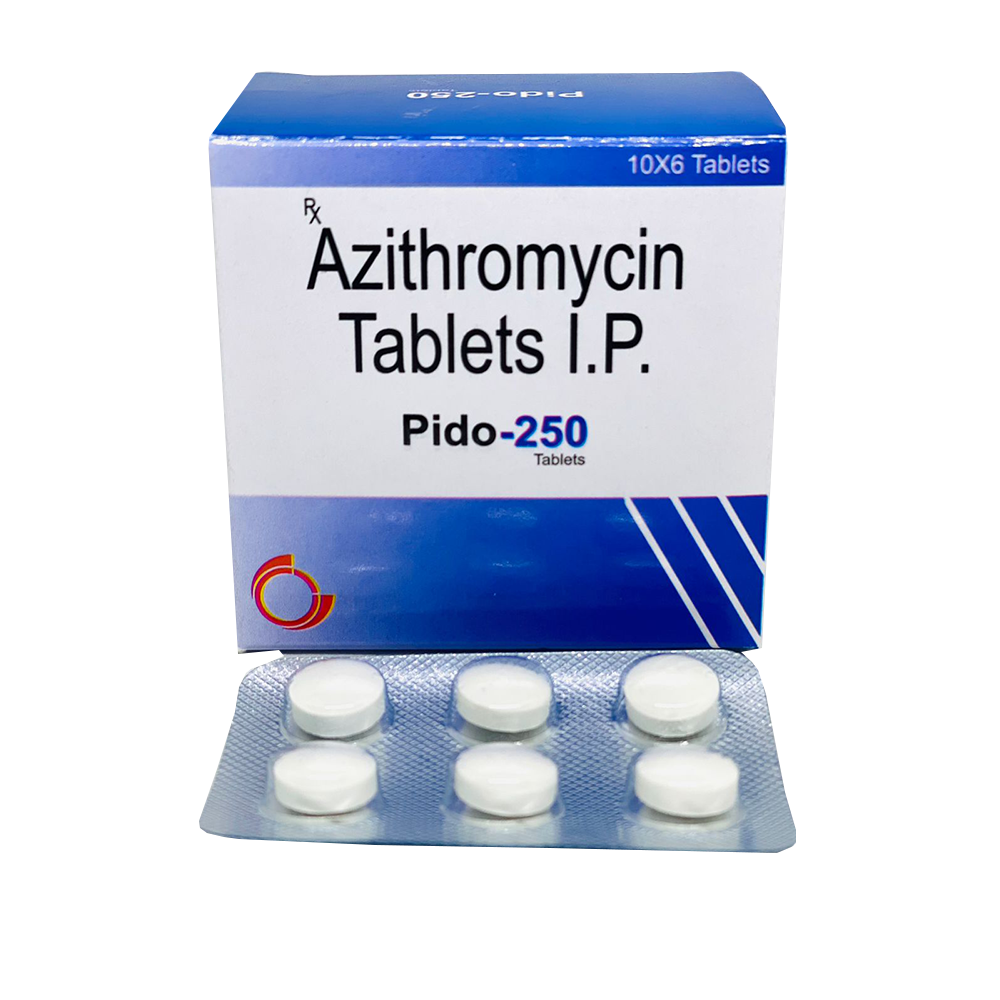
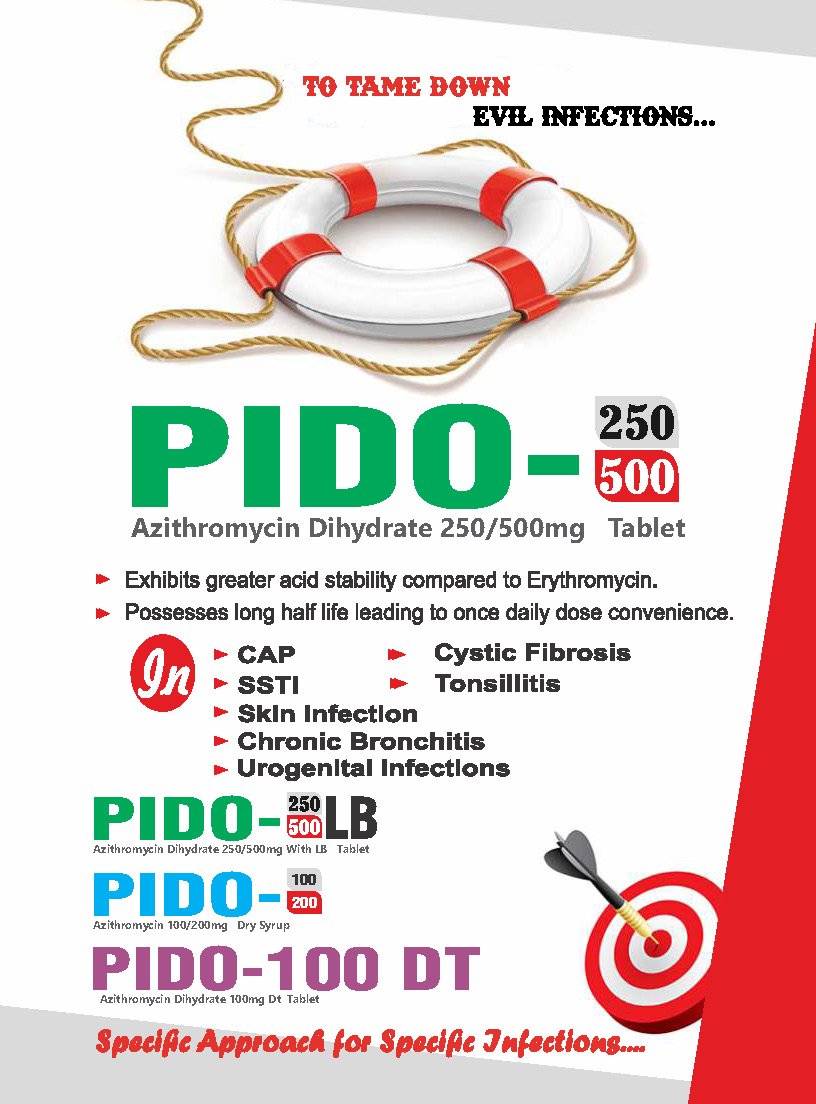
Azithromycin (as Azithromycin Dihydrate) – 250 mg
-
Lactic Acid Bacillus – 60 Million Spores
PACKING: 10 x 6 (Blister)
Dosage Form
Tablet / Capsule (as marketed)
Pharmacological Classification
-
Azithromycin: Macrolide Antibiotic
-
Lactic Acid Bacillus: Probiotic
Mechanism of Action
Azithromycin is a broad-spectrum macrolide antibiotic that inhibits bacterial protein synthesis by binding to the 50S ribosomal subunit of susceptible microorganisms. This action prevents bacterial growth and replication.
Lactic Acid Bacillus is a beneficial probiotic organism that helps restore normal intestinal flora altered during antibiotic therapy. It reduces the risk of antibiotic-associated diarrhea and maintains gut microbial balance.
Indications (Therapeutic Uses)
PIDO 250 is indicated for the treatment of mild to moderate bacterial infections such as:
-
Upper respiratory tract infections (pharyngitis, tonsillitis, sinusitis)
-
Lower respiratory tract infections (bronchitis, pneumonia)
-
Otitis media
-
Skin and soft tissue infections
-
Certain gastrointestinal and enteric infections
-
Typhoid fever (as per sensitivity)
Note: Use should be based on clinical evaluation and bacterial sensitivity.
Dosage & Administration
-
To be taken strictly as prescribed by a registered medical practitioner.
-
Usually administered once daily.
-
May be taken with or without food.
-
Complete the full prescribed course to prevent antibiotic resistance.
Contraindications
-
Hypersensitivity to Azithromycin, erythromycin, or other macrolide antibiotics
-
Severe hepatic impairment
-
History of cholestatic jaundice/hepatic dysfunction associated with prior azithromycin use
Warnings & Precautions
-
Use cautiously in patients with liver disorders.
-
Caution in patients with cardiac arrhythmias or prolonged QT interval.
-
Not effective against viral infections (e.g., common cold, flu).
-
Avoid unnecessary or prolonged use to prevent antimicrobial resistance.
Adverse Effects
Common side effects may include:
-
Nausea
-
Vomiting
-
Abdominal pain
-
Diarrhea
-
Dyspepsia
Rare but serious:
-
Allergic reactions (rash, itching, angioedema)
-
Hepatotoxicity
-
QT prolongation
Patients should seek immediate medical attention if severe reactions occur.
Drug Interactions
-
Antacids containing aluminum or magnesium
-
Warfarin (monitor INR)
-
Digoxin
-
Other QT-prolonging drugs
Use in Special Populations
Pregnancy: Use only if clearly needed and prescribed by a physician.
Lactation: Use with caution under medical supervision.
Pediatric & Geriatric: Dose adjustment may be required based on clinical condition.
Storage
Store in a cool, dry place below 25°C.
Protect from moisture and direct sunlight.
Keep out of reach of children.


Reviews
There are no reviews yet.